
Why Does My Olive Wood Board Have Bark Edges?
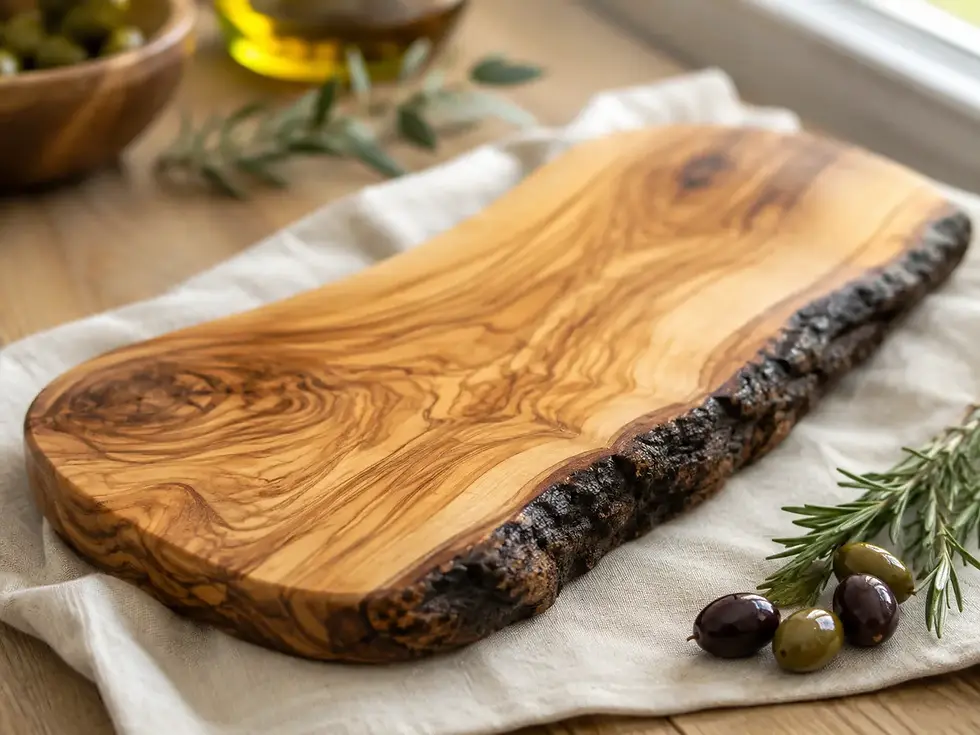
If your olive wood board has a dark, rough edge running along the side, that is the natural bark of the olive tree, left on by hand on purpose. It is not a defect. It is the clearest sign that your board is genuine olive wood, shaped from a real branch or trunk rather than cut from a uniform factory blank. Here is what the bark edge is, why we keep it, whether it is safe, and how to care for it.
What the Bark Edge Actually Is

The bark edge, sometimes called a live edge, is the original outer surface of the olive tree, kept right where the wood met the outside world. Every piece we make begins with an olive tree in Crete that has reached the end of its fruit producing life, often after 100 to 300 years of growth. No productive trees are cut down. Our Cretan artisans read the natural contours of each piece and decide how to shape it, and on many boards and bowls they leave part of that bark edge in place. Sometimes what looks like bark is actually the wood's own dark grain near the edge. Either way, it is nature's own design, and to us it is part of the miracle of the material.
Why We Keep the Bark Edge On
A bark edge gives the piece accent and character, and it proves the board is real, hand shaped olive wood rather than a stained or printed lookalike. It also tells you something about style. A live, irregular bark edge suits people who love natural shapes and rustic texture. A clean straight edge suits people blending natural materials with a more modern kitchen. Neither is better. They are two different feelings, and we make both.
Is the Bark Edge Safe to Use With Food?
Yes. Every piece is sanded by hand and sealed with a blend of organic olive oil and beeswax, with no lacquers, no chemical coatings, and no plastic. The result is a food safe, naturally antibacterial surface. That said, the bark edge is meant for accent and presentation, not for cutting. You would not chop on the edge anyway, it is not comfortable, so think of it as the part that frames the food you serve. Many customers tell us the natural bark and grain give them more trust putting food on real olive wood than on plastic or stained wood. If food safety is your main question, we answer it fully in are olive wood cutting boards safe to use, and we compare the two materials in olive wood cutting board vs plastic.
Can the Bark Ever Come Loose?
It can, over time, depending on how the piece is cared for. Bark is a natural surface, so dryness and heat are its enemies. To keep it solid and looking its best, oil the piece regularly with a food safe oil, and do not leave it in hot or very dry spots for long, such as next to the stove or on a sunny windowsill. Treated well, the edge stays put and the whole piece deepens into a richer patina with age. Our full routine is in the olive wood cutting board care guide.
Which Pieces Have a Bark or Live Edge?
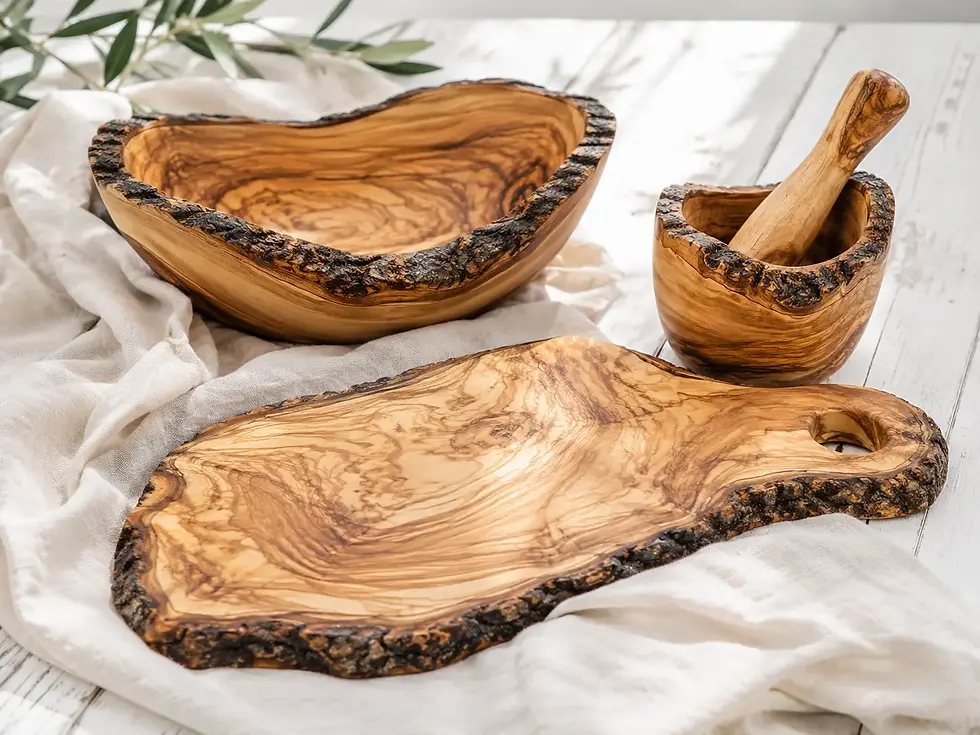
Several of our most loved pieces show the natural edge, including the Natural Cutting Board, the Bread Rustic Bowl, the Natural Bowl Duo Grande, and the Rustic Grind mortar and pestle. Each one is one of a kind, because no two olive trees, and no two edges, are ever the same. If you love the rustic look, lean into a live edge piece. If you prefer a cleaner line for a modern kitchen, choose a straight edged board. Either way you are getting a piece hand shaped in Crete, finished in Oshawa, and made to be used.
Bring One Home
Browse the natural edge pieces in our olive wood cutting boards collection, or message us if you want help choosing between a live edge and a straight edge. Every piece ships across Canada and is backed by our 60 day promise.


Comments